Website maintenance plans should define outcomes and boundaries

Compare website maintenance plans by updates, backups, monitoring, content help, performance checks, response times and the work explicitly excluded.
Website maintenance plans should define outcomes and boundaries
Updates and dependency management
Backups, restoration and disaster recovery
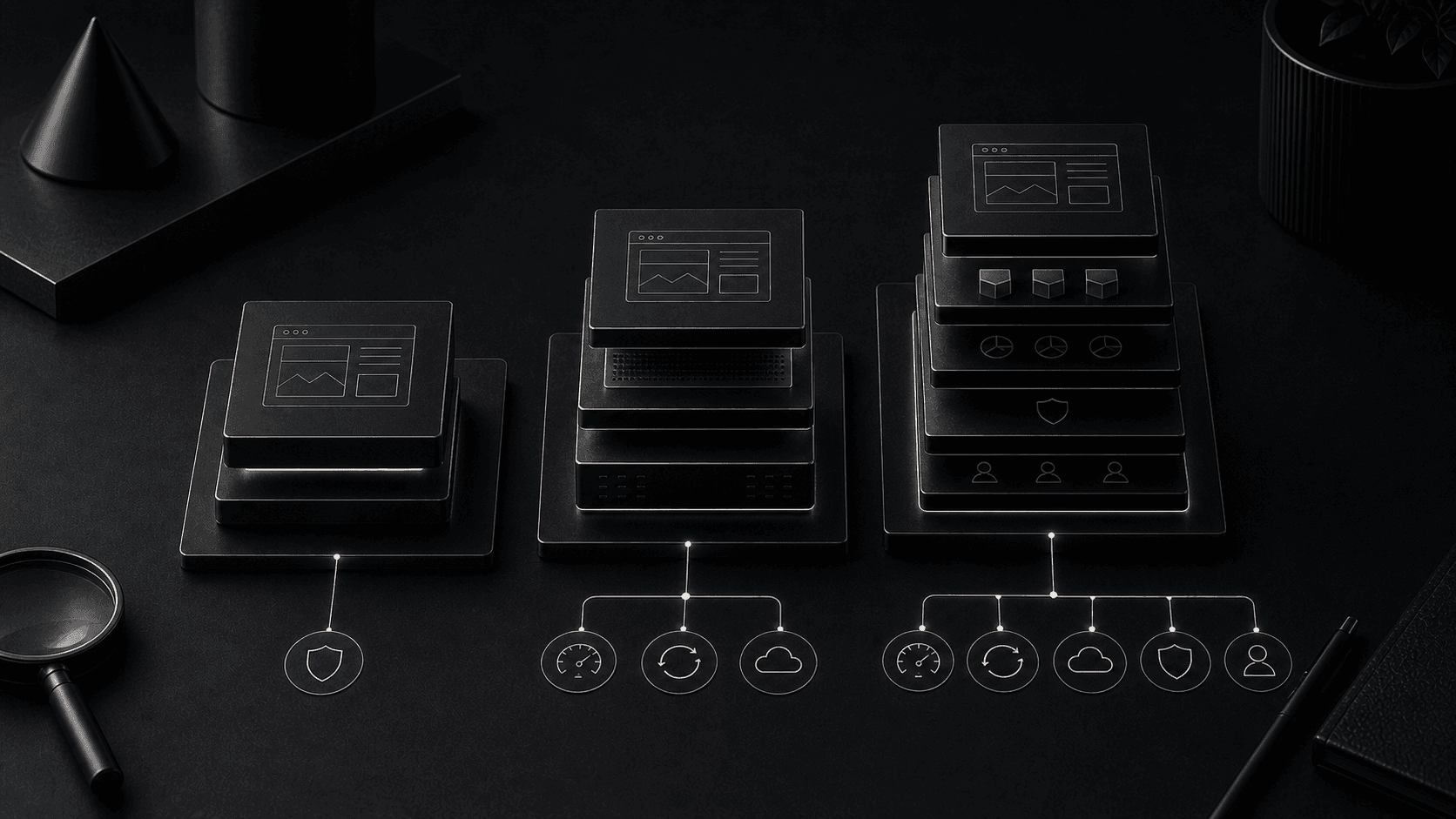
A buyer's framework for separating meaningful maintenance plans from vague retainers and update-only packages.
Search signals reviewed together: index coverage, query performance and on-site outcomes.
Ongoing disciplines covered from technical maintenance to content refresh and measurement.
“A buyer's framework for separating meaningful maintenance plans from vague retainers and update-only packages.”Website Maintenance Plans Compared field note
Website maintenance plans are easiest to compare when they define the systems covered, work included, expected response and remaining exclusions. Labels such as basic, professional and premium reveal little. A useful plan explains backup recovery, software updates, security monitoring, performance attention, content support and incident ownership in operational terms. It also states what counts as new development, because maintenance and product change require different planning.
The plan should correspond to the importance of the website. A brochure site needs a different level of cover from an ecommerce service or client portal. Before selecting a tier, list critical journeys, external dependencies, publishing frequency and the commercial effect of downtime. That evidence determines which outcomes matter and prevents a buyer paying for impressive features that do not reduce a meaningful risk.
For this part of the work, record the current coverage, the person accountable and the evidence that will show whether the service boundary is being met. This prevents an attractive label from replacing an operational commitment. It also makes later review more useful because the business can distinguish an isolated task from a repeated condition that needs a larger design or engineering decision. The record does not need to be elaborate; it needs to be consistent, understandable and connected to action.
Every plan should state which software and services are maintained. Core platform releases, plugins, packages, server components and connected APIs can all introduce change. Installing updates automatically may be efficient for low-risk dependencies, while important changes need staging, review and a controlled release. The plan must say how failed updates are detected and reversed.
Dependency management also includes removal. Unused plugins, abandoned libraries and redundant scripts create attack surface and performance cost. A responsible provider reviews whether components remain supported and necessary instead of merely keeping them current. When replacement work exceeds maintenance scope, the issue should be documented early enough for the business to plan it.
For this part of the work, record the current coverage, the person accountable and the evidence that will show whether the service boundary is being met. This prevents an attractive label from replacing an operational commitment. It also makes later review more useful because the business can distinguish an isolated task from a repeated condition that needs a larger design or engineering decision. The record does not need to be elaborate; it needs to be consistent, understandable and connected to action.
A backup feature is not a recovery plan. Compare how often files and data are copied, how long versions are retained, whether copies are isolated from the live account and who can initiate restoration. Dynamic websites may need more frequent database backups than content sites because orders, submissions or account changes occur throughout the day.
Plans should include a recovery test at an appropriate interval. That exercise confirms the files are complete, credentials are available and the restored website behaves correctly. It also reveals a realistic recovery time. Without testing, the business discovers missing data or broken procedures at the moment it can least afford uncertainty.
For this part of the work, record the current coverage, the person accountable and the evidence that will show whether the service boundary is being met. This prevents an attractive label from replacing an operational commitment. It also makes later review more useful because the business can distinguish an isolated task from a repeated condition that needs a larger design or engineering decision. The record does not need to be elaborate; it needs to be consistent, understandable and connected to action.
Uptime checks confirm that a server responds, but they do not prove that forms, payments or integrations work. Higher-value plans monitor the journeys that matter and route alerts to someone responsible for investigation. The agreement should identify coverage hours, severity levels, response targets and how progress is communicated during an incident.
Security monitoring needs the same clarity. Automated scanning can identify suspicious change, dependency warnings and repeated access attempts, but an alert creates value only when somebody interprets it. Website maintenance services should connect monitoring with containment, recovery and a record of what changed.
For this part of the work, record the current coverage, the person accountable and the evidence that will show whether the service boundary is being met. This prevents an attractive label from replacing an operational commitment. It also makes later review more useful because the business can distinguish an isolated task from a repeated condition that needs a larger design or engineering decision. The record does not need to be elaborate; it needs to be consistent, understandable and connected to action.
Websites drift even when nobody intentionally redesigns them. New images increase page weight, third-party scripts expand, browsers change and editors create unexpected content combinations. A maintenance plan may include periodic performance and accessibility checks, especially on high-value templates. The useful commitment is not a perfect score but investigation when an agreed threshold or critical behaviour deteriorates.
Content health includes broken links, expired claims, incorrect staff or location details and neglected legal information. Plans differ on whether the supplier identifies these issues, corrects supplied changes or actively helps govern the content. Define the responsibility according to internal capacity. Technology cannot keep information accurate when nobody owns the source.
For this part of the work, record the current coverage, the person accountable and the evidence that will show whether the service boundary is being met. This prevents an attractive label from replacing an operational commitment. It also makes later review more useful because the business can distinguish an isolated task from a repeated condition that needs a larger design or engineering decision. The record does not need to be elaborate; it needs to be consistent, understandable and connected to action.
Some plans include a monthly allowance for edits. Clarify whether unused time rolls over, which roles can request work and what counts as a small change. Replacing copy or imagery inside an existing component differs from designing a new template or building a feature. Written examples prevent routine requests from becoming repeated scope discussions.
An improvement allowance can be useful when it supports measured iteration rather than arbitrary activity. Analytics, search data and enquiry feedback may reveal a weak page or unclear form. Small controlled changes can then improve the website without a redesign. SEO-friendly service page design shows how content, proof and calls to action can be refined inside an existing system.
Response time means when investigation begins, not necessarily when every issue will be fixed. Resolution depends on cause, access and third-party involvement. Plans should distinguish critical failures from routine requests and state how each is prioritised. If the website supports revenue or customer service outside office hours, coverage must reflect that reality.
Regular reporting should show updates completed, alerts investigated, backups verified, changes delivered and risks requiring a decision. Avoid reports filled with raw tool output. The purpose is accountability and planning. A short record of meaningful work helps the business see whether the plan matches actual demand and whether recurring problems justify a deeper change.
Choose by matching responsibilities to risk, then compare cost. A simple website with internal technical capability may need update and backup assurance only. A commercially critical site may justify active journey monitoring, faster response, performance review and continuing content help. More coverage is not automatically better; unused commitments create expense without reducing exposure.
Document the existing platform and ask each provider to mark inclusions, limits and exclusions against the same list. Review website maintenance cost in the UK before comparing totals. Versatech's managed website approach keeps design, engineering and ongoing ownership connected, so the people responsible for maintenance understand why the website works as it does.
Planning a website or digital system?
Versatech brings senior strategy, design and engineering into one delivery team. The first conversation identifies the useful next step before scope is fixed.
START A PROJECTSEE SERVICESStart with a focused 30-minute discovery call and leave with a clearer route forward.